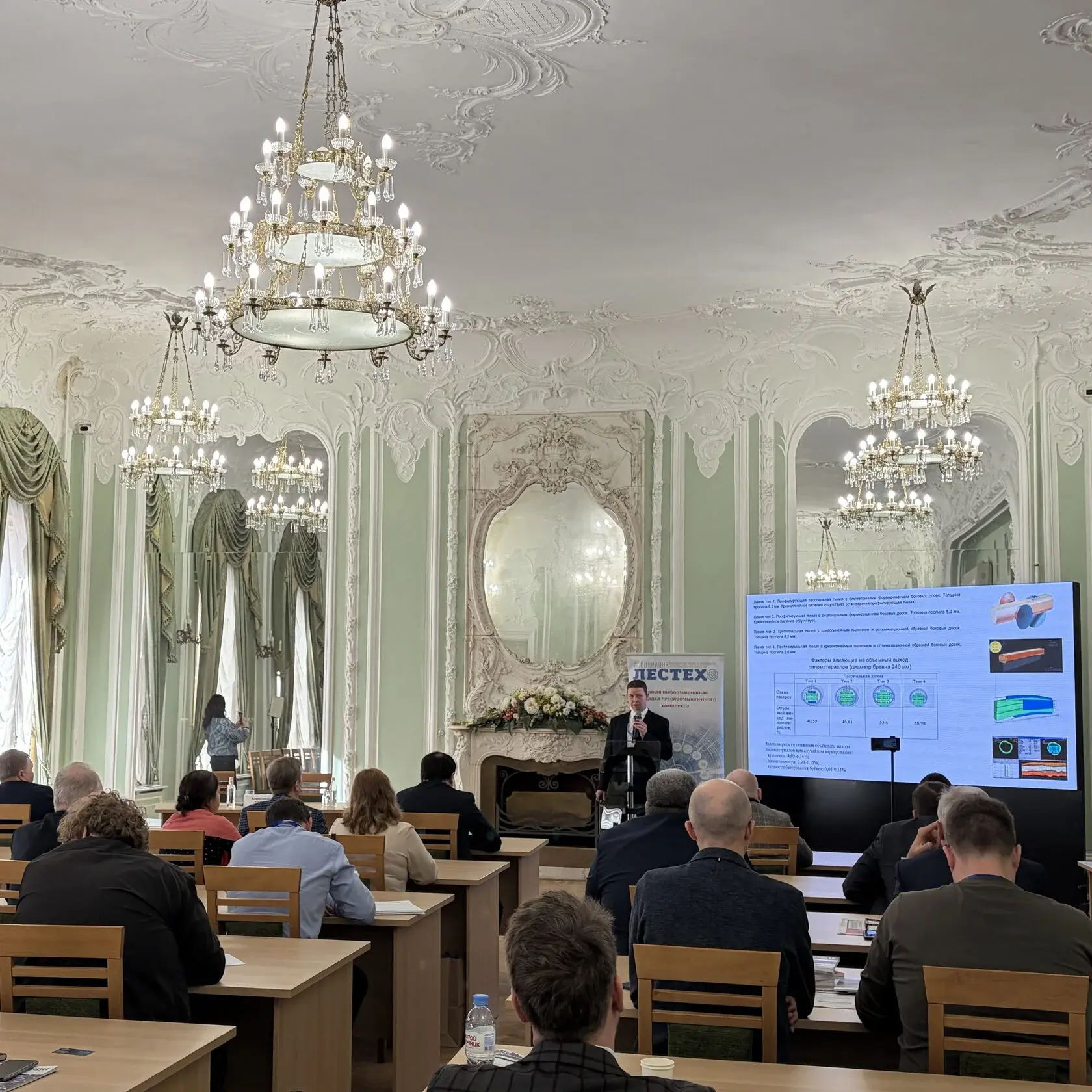
On March 25, the Biofuel Congress and the "Sawmill Production" conference concluded their work. Over two days, industry specialists discussed technological modernization of enterprises, development of the domestic market, digitalization of production, the use of artificial intelligence, regulatory issues, and promising areas of wood processing.
The business program demonstrated a high level of engagement from the professional community: almost every presentation was accompanied by an active dialogue with the audience. Discussions extended beyond individual reports and turned into a collaborative search for practical solutions aimed at improving enterprise efficiency and the long-term development of the industry. Participants paid special attention to issues of market consolidation and the formation of an industry association capable of representing the interests of the timber industry in dialogue with the state.
Based on the outcomes of the events, it is worth noting the high productivity of professional communication and the value of open expert discussion, which made it possible to align the positions of different industry segments. We believe that the events served as a platform for productive business interaction, strengthening cooperation, and developing solutions focused on the stable and efficient operation of the timber industry.
We thank the speakers, partners, and participants for their contribution to the events and invite the professional community to continue the dialogue at RESTEC's upcoming industry projects dedicated to the development of the forest industry.
The next event addressing issues of timber industry development is the conference "Logging: Enterprise Development, Implementation of IT Solutions, Forestry Machinery," which will take place on April 23–24 at the Saint Petersburg Chamber of Commerce and Industry.
The business program demonstrated a high level of engagement from the professional community: almost every presentation was accompanied by an active dialogue with the audience. Discussions extended beyond individual reports and turned into a collaborative search for practical solutions aimed at improving enterprise efficiency and the long-term development of the industry. Participants paid special attention to issues of market consolidation and the formation of an industry association capable of representing the interests of the timber industry in dialogue with the state.
Based on the outcomes of the events, it is worth noting the high productivity of professional communication and the value of open expert discussion, which made it possible to align the positions of different industry segments. We believe that the events served as a platform for productive business interaction, strengthening cooperation, and developing solutions focused on the stable and efficient operation of the timber industry.
We thank the speakers, partners, and participants for their contribution to the events and invite the professional community to continue the dialogue at RESTEC's upcoming industry projects dedicated to the development of the forest industry.
The next event addressing issues of timber industry development is the conference "Logging: Enterprise Development, Implementation of IT Solutions, Forestry Machinery," which will take place on April 23–24 at the Saint Petersburg Chamber of Commerce and Industry.